
Electric vs Acoustic Guitar: Which Should I Learn First?
Walk into any guitar school in Singapore and it's one of the first questions new students ask — "Should I start on acoustic or electric?" It seems like a simple decision, but it trips up a lot of beginners because everyone has a different opinion. Some say acoustic builds better technique. Others say electric is easier on the fingers. Who's right?
The truth is, both camps have a point. The better question isn't which guitar is objectively easier to start on — it's which guitar is right for you. Here's how to think it through.
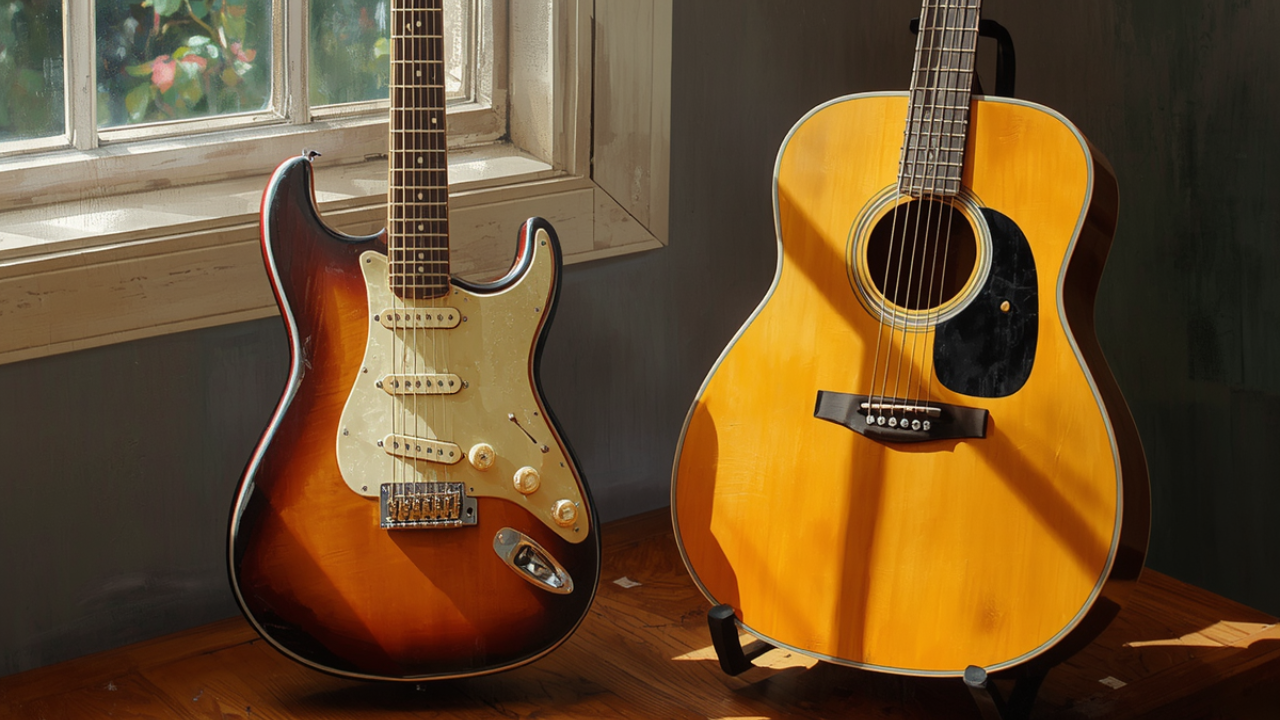
The Case for Starting on Acoustic Guitar
Acoustic guitar has a reputation as the "proper" place to start, and there's genuine logic behind it. Acoustic strings sit a little higher off the fretboard and require more finger pressure to fret cleanly. That added resistance builds finger strength faster, and students who develop strong hands on acoustic tend to find electric feels effortless by comparison.
There's also the simplicity factor. An acoustic guitar is genuinely plug-and-play — no amp, no cables, no settings. You pick it up and play. For students who practise in an HDB flat and need to keep noise down, that flexibility is a real advantage. You can strum quietly on the sofa at 10pm without disturbing the neighbours.
Acoustic is also the natural home for a huge range of music — pop, folk, singer-songwriter, worship music. If your goal is to sit around a bonfire, lead a campfire worship session, or accompany your own singing, acoustic is almost certainly the right call.
At Guitar Emerge, all beginners — acoustic and electric — start with our Fundamental Guitar Course, which builds the core skills every guitarist needs regardless of which direction they go. From there, acoustic-focused students progress into our dedicated Acoustic Guitar Course, covering fingerstyle technique, chord melody, and beyond.
The Case for Starting on Electric Guitar
Here's what the acoustic-first crowd sometimes gets wrong: electric guitars are not harder to learn on. In many ways, they're actually more beginner-friendly. Electric strings are thinner and sit closer to the fretboard, which means less finger pressure is needed to fret notes cleanly. Chord shapes that feel painful on acoustic can feel almost effortless on a well-set-up electric.
More importantly — motivation matters enormously when you're learning guitar. If your heart is set on playing like your favourite rock, pop, or R&B artist, starting on acoustic can feel like a detour. You'll practise less. You'll be less excited about it. And that kills progress faster than any technical challenge.
If your goal is to play electric music, start on electric. It's that simple. You don't need to "earn" electric guitar by suffering through acoustic first.
Students who go the electric route follow the same Fundamental Guitar Coursefoundation beforemoving into our Electric Guitar Course, which covers tone shaping, lead playing, soloing, and understanding gear.
The Real Deciding Factor: What Music Do You Want to Play?
Forget technique arguments for a moment. Ask yourself this one question: when you imagine yourself playing guitar a year from now, what does it sound like?
If you're picturing yourself strumming worship songs at your church or playing acoustic covers of your favourite songs — choose acoustic. If you're imagining yourself playing electric riffs, experimenting with pedals, or playing along to rock and pop tracks — choose electric. If you genuinely can't decide, or if you want to play for a church worship team (which typically uses both), come in for a trial class. After thirty minutes with one of our teachers, you'll have a very clear sense of which direction fits you.
One important note: the fundamentals of guitar — music reading, rhythm, chord theory, technique — are largely the same regardless of which type you start on. Switching between acoustic and electric later is far easier than most beginners fear. You're not locked in to a permanent decision.
Why Guitar Emerge?
At Guitar Emerge, we teach both acoustic and electric guitar through dedicated, structured courses — and we've done so since 2012. Every instructor holds a Grade 8 guitar certification and brings real performance experience to every lesson. We don't use a generic external curriculum; our in-house syllabus is written specifically for how real students learn, progressing logically from one skill to the next.
All our lessons are 1-to-1, which means your teacher builds your course around the music you want to play — whether that's worship music, pop, rock, or anything in between. And when you sign up, you receive a free acoustic or electric guitar as part of your package, so you have everything you need to practise from day one.
If you're still unsure which type of guitar is right for you, our free 30-minute trial class is the perfect way to find out — no commitment, just a chance to try and see what clicks.
Frequently Asked Questions
Is acoustic or electric guitar easier for beginners?
Electric guitar is technically easier on the fingers — the strings are lighter and closer to the fretboard, requiring less pressure. Acoustic builds finger strength faster but can feel harder in the early weeks. That said, "easier" matters far less than motivation. The guitar you're excited to pick up every day is the one you'll make the most progress on.
Can I switch from acoustic to electric later?
Absolutely. Most guitarists who start on one eventually explore the other, and the transition is much smoother than beginners expect. Your core technique — fretting, rhythm, chord knowledge — transfers directly. The main adjustment is getting used to the different feel and learning how to use an amplifier and any effects.
What type of guitar is best for playing in a church worship team?
Most contemporary worship teams use electric guitars as the primary lead instrument, often paired with acoustic for rhythm. If your goal is to join or lead worship, starting on electric is a practical choice — though many worship guitarists play both. Check out our post on how to start playing guitar for your church worship team for a deeper look.
The Bottom Line
There's no universally "correct" answer to electric vs acoustic. The right guitar is the one that matches the music you love and the goals you have. Both paths lead to the same place — playing the songs that matter to you, with confidence and skill.
Book your FREE 30-min trial and take the first step — guitaremerge.com. We'll help you figure out exactly where to start.
Still unsure? Let us help you decide. Book a free 30-minute trial class at guitaremerge.com/contact or WhatsApp us at +65 8755 2527. Bring your questions — we love this conversation.